
Burleson County Sex Offender Checks
The official starting point is the Texas Public Sex Offender Registry. Texas DPS operates that system under Code of Criminal Procedure Chapter 62. It can return records by person or place, and a county search helps separate Burleson County results from places with similar names. Searchers can then open a profile and compare the listed identifiers, registration status, address information, offense data, and registering agency.
The state registry is the main public source, but it is not the only access channel. A person who resides inside a municipality registers through the police chief's authority. Someone outside a municipality registers with the Burleson County Sheriff. Questions about a listed local record or suspected noncompliance should go to that registering agency. The sheriff can be reached through its official county page or at 979-567-4343. Emergencies go to 911.
Telephone and agency contact are useful fallbacks when the portal does not settle the issue. The local authority can address its registration work, while DPS controls the statewide public entry. Note the profile's registering agency before calling so the question reaches the right custodian.
Filter Burleson County Registry Results
A county filter can answer a different question than a name search. It shows records tied to Burleson County without requiring the searcher to know a spelling or alias first. Name searches work best when paired with other profile details. Address and map searches help with a specific place, but boundaries, map pins, and radius behavior should be read as the current interface presents them.
The manifest image below comes from the official Texas registry search and shows the correct state-operated channel without centering an individual record.
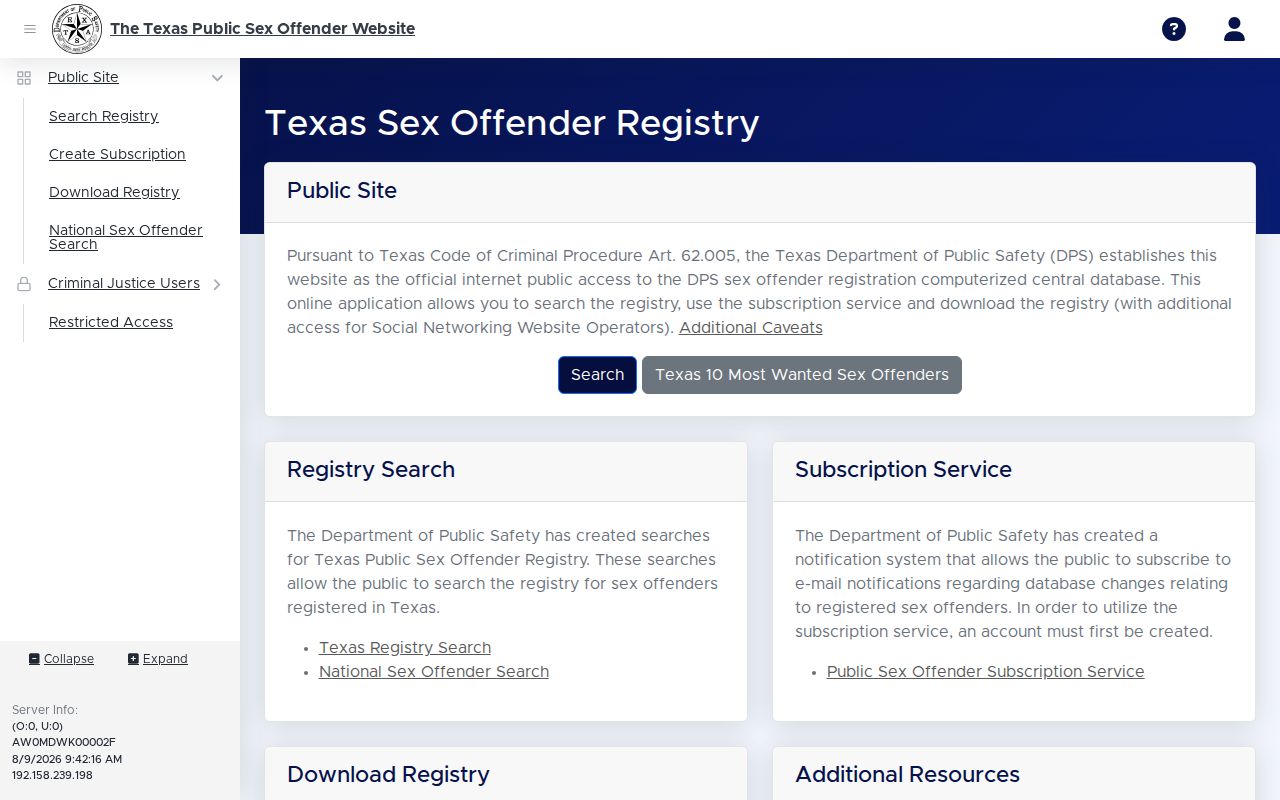
That statewide interface matters locally because Burleson County police and sheriff registration data flows into the same DPS system.
Texas Public Sex Offender Registry Searches
Use the search method that fits the known fact. Spelling affects name results, so location tools are useful when a full legal name is uncertain. A blank result is not proof that no duty exists. It may reflect spelling, a different county, nonpublic juvenile information, or a record that needs review by the registering agency.
- Open the official Texas DPS registry and review its conditions of use.
- Choose a name, address, city, ZIP, county, or map search. Select Burleson for a county-wide view.
- Compare the result list with known identifiers rather than relying on a name alone.
- Open the full profile and note the registering agency, status, address, offense, and notification details.
| Field or Function | Type | Required | Notes |
|---|---|---|---|
| Name search | Text | Search-dependent | Spelling and aliases can affect results. |
| Address search | Location | Search-dependent | Use a valid location; map behavior may vary. |
| City | Text or dropdown | No | Narrows results to a municipality. |
| County | Dropdown | No | Select Burleson for county results. |
| ZIP Code | Text | No | Narrows results by postal area. |
| Map search | Interactive map | No | Supports geographic browsing. |
Burleson County Registration Routes
Registration responsibility turns on residence. Municipal residents report under the police chief's authority, while residents outside a municipality report to the Burleson County Sheriff's Office. The general deadline is no later than the later of seven days after arrival or the first date local policy permits registration. The local authority keeps its registry and sends the information to DPS.
This split is easy to miss. A Caldwell resident's record may identify the Caldwell Police Department, while an address in an unincorporated part of Burleson County may point to the sheriff. The statewide profile connects those local roles. Suspected failure to register should be reported to the agency named on the record, not handled through personal contact with the registrant.
Local registration and public access are linked but not identical tasks. Police and sheriff staff verify data under Chapter 62, and DPS publishes the statewide view. A searcher should use the public profile for awareness and contact the named agency only for a focused question or report.
Registry Profiles: What They Show
A public profile combines identity, location, registration, and offense fields. The data supports identification and awareness, but it does not expose every fact held by an agency. Texas law withholds victim-identifying details and several personal identifiers. Juvenile registration information can also be made nonpublic by court order.
| Name and Aliases | Published names that help distinguish records and account for known aliases. |
|---|---|
| Photo and Description | Photograph, sex, race, age or birth information, height, weight, hair, eyes, and visible marks when public. |
| Address or Location | The public registered location as allowed by Chapter 62. |
| Offense Details | Offense description, statute, and conviction or adjudication data, with victim age category where public. |
| Registration Data | Status, risk or notice information, registering agency, and other public duty details. |
| Withheld Data | No Social Security number, driver-license number, phone number, online identifier, victim identity, or specified employer information. |
Profile fields should not be read as a complete Burleson County criminal history. The registry is a separate Chapter 62 dataset with a defined public purpose.
Excluded fields matter as much as visible ones. The absence of a phone number, online identifier, victim name, or specified employer information reflects statutory limits, not a failed search. A juvenile record may also be absent because a court ordered the registration information nonpublic.
Burleson Results and NSOPW
The National Sex Offender Public Website adds a cross-state layer. It is useful when a search reaches beyond Texas or when a past location is known in another participating jurisdiction. The Texas DPS registry remains the direct source for Texas program detail, subscriptions, and the state's explanation of its registration rules.
The following image is sourced from the official U.S. Department of Justice national search.
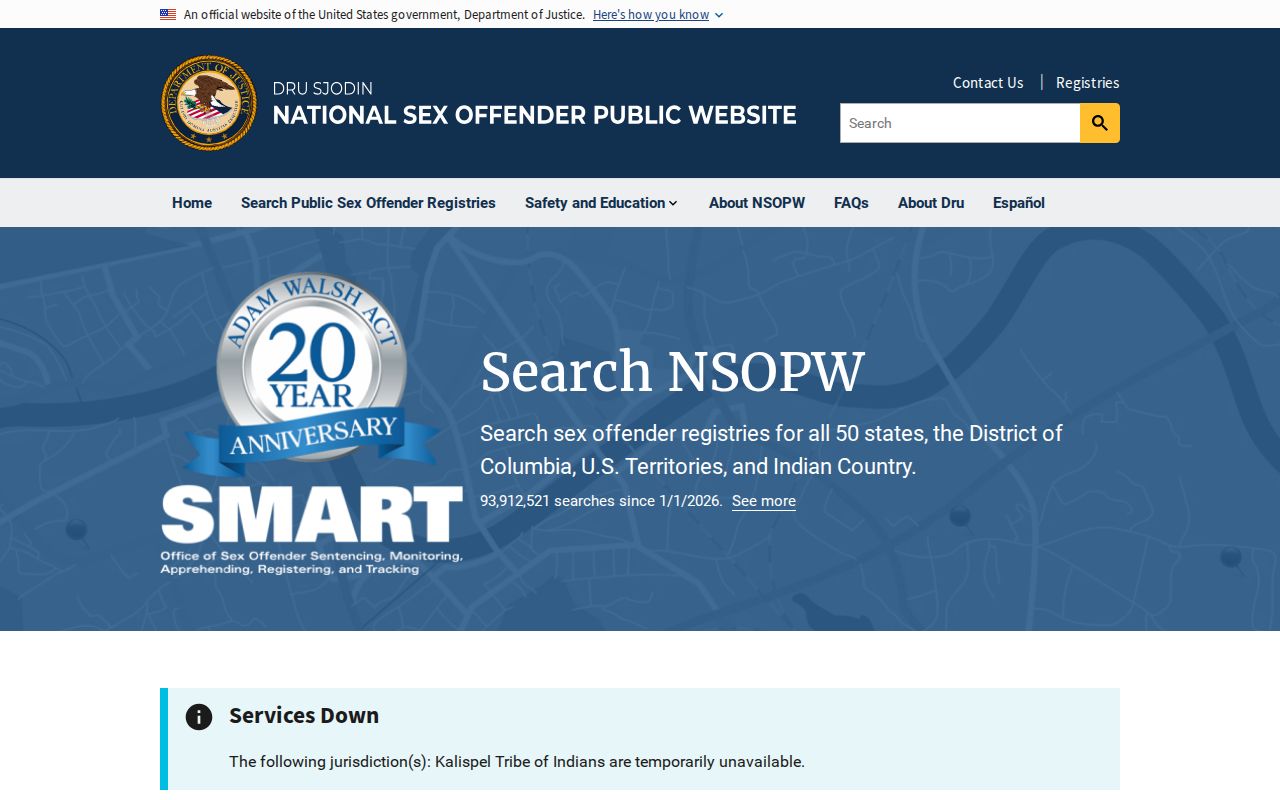
NSOPW broadens geographic reach, but a Texas result should still be checked against the current DPS profile and the listed local registering authority.
Registration Levels and Duties in Texas
Texas does not present every registrant through a simple federal three-tier public chart. Duration usually turns on the reportable offense and statutory circumstances. Adult duties are generally ten years after discharge from supervision or lifetime. Juvenile duties generally run until ten years after the later relevant discharge or dismissal date unless a court modifies the duty. Verification may be annual, every 90 days, or otherwise enhanced.
| Texas Duty | General Duration | Verification |
|---|---|---|
| Adult ten-year duty | Generally ten years after discharge from supervision | Frequency depends on Chapter 62 status. |
| Adult lifetime duty | Lifetime for listed offenses and repeat circumstances | May be annual, 90-day, or enhanced. |
| Juvenile duty | Generally ten years after the later relevant discharge or dismissal | Subject to court modification and confidentiality rules. |
The DPS registry FAQ is the sound source for current duration and verification detail. A profile label should not be forced into a tier system Texas does not use that way.
Duration and check-in frequency should be read separately. A lifetime duty does not by itself state whether verification is annual or more frequent. The controlling offense, repeat status, and other Chapter 62 conditions determine the result, so the DPS explanation and current profile are stronger than a generic tier label.
Burleson County Registry Notifications
DPS allows public registry subscriptions through a CRD Public Website account. Community notice can also take a more direct form. High-risk offenders and civilly committed sexually violent predators may trigger postcard notice in English and Spanish to the immediate community. The DPS registration program overview explains how local records and state notice work together.
The image below comes from that official DPS program page.
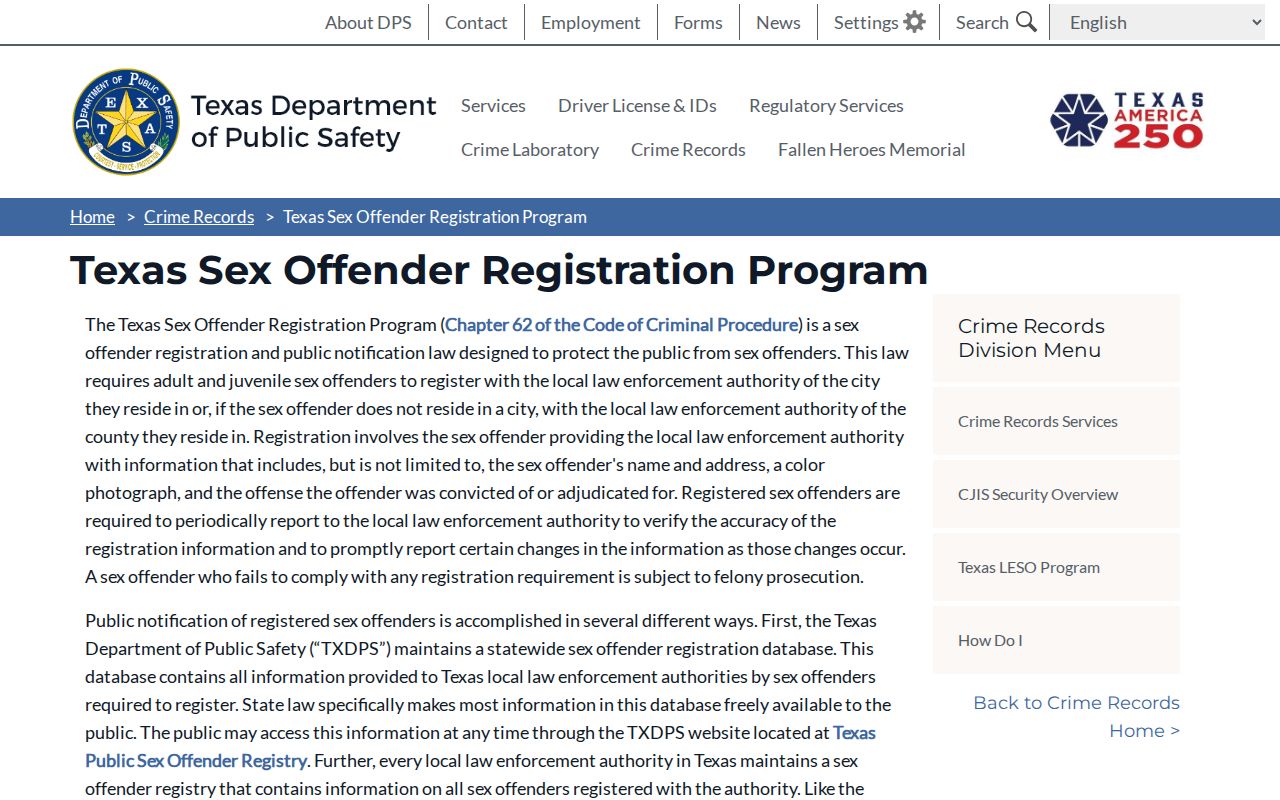
This program context explains why a Burleson County registry lookup can include both a statewide profile and notice work performed by a local authority.
Wrong Burleson Registry Address
If an address seems wrong, first open the full record and identify the registering agency. Save the public details needed to describe the concern, such as the name, listed location, and status. Then contact the police department or Burleson County Sheriff shown on the profile. Report suspected noncompliance as a factual concern. Do not investigate at the listed address or confront anyone.
Texas has no single statewide school or park distance rule that applies to every registrant. A parole term, probation condition, municipal ordinance, or civil-commitment rule may create a separate restriction. Location concerns must therefore be checked against the authority that applies to that person, not a broad assumption drawn from the map.
Using Registry Information Lawfully
Registry information supports safety planning and community awareness. Chapter 62 makes most registry information public, but that access is bounded by law. It does not authorize threats, harassment, injury, vigilantism, or crimes against a registrant or household. Searchers should use official records, avoid spreading claims beyond what the profile says, and report urgent danger through 911.
Misuse warning: The official registry warns that using its information to injure, harass, or commit a crime is unlawful under Texas Code of Criminal Procedure Chapter 62 and other criminal or civil laws.
A Burleson County sex offender record should be verified through DPS and the listed registering agency. It should never be treated as permission for personal enforcement.
Use Burleson County registry facts with care and restraint.